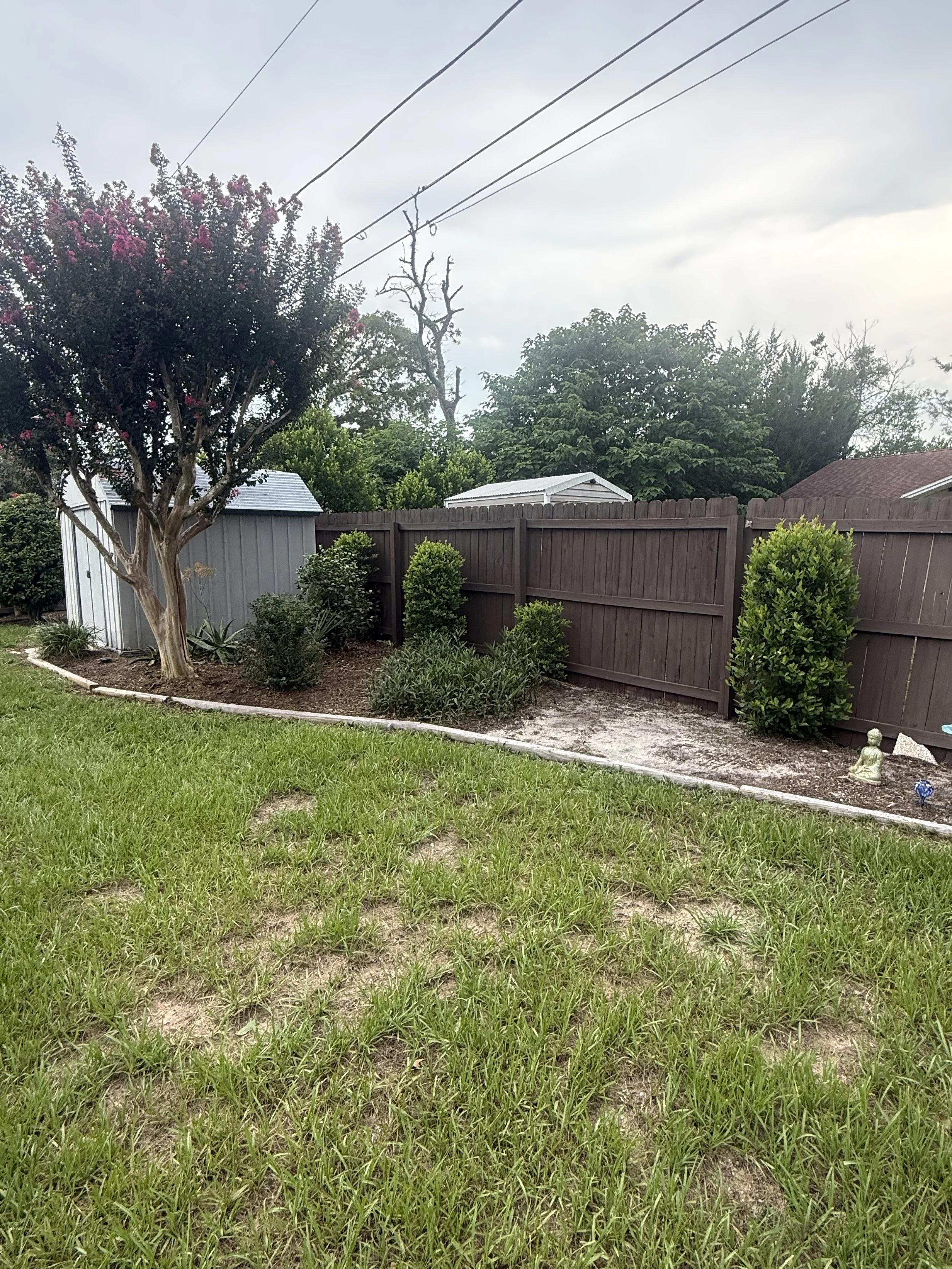
Repair or Replace Your Wood Fence? A Citrus County Homeowner's Guide
A few broken boards may be an easy fix. Several rotting posts tell a different story. Here’s what to look for before you pay to repair or replace your wood fence.
A leaning fence can look like a big job from the back porch. Up close, it might be one loose post. A fence that still looks straight, on the other hand, can have several posts starting to rot at ground level. If you’re deciding whether to repair or replace a wood fence in Citrus County, start by checking what’s holding it up.
Start with the posts, rails, and gate
Walk the fence line and look at where each post meets the ground. Check for soft wood, crumbling areas, or sections that lean together. Then look at the horizontal rails that hold the pickets. If the rails are solid and the posts are stable, you may be able to save that section even if several boards look rough.
A dragging gate is worth a closer look, too. Loose hinges or a gate that has shifted over time may be straightforward to fix. If the post holding the hinges is leaning, work on the gate alone may only help temporarily.
When a wood fence repair makes sense
A repair is often a good choice when the damage is limited to one spot and the surrounding wood is sound. A few split pickets, a loose rail, or one deteriorated post can often be replaced without rebuilding the whole fence.
If part of the fence stays damp after rain, look at what’s happening around it. Wet leaves piled against the boards or a sprinkler hitting the same section every morning can help explain why one area is aging faster. Addressing that source of moisture can help the repair last.
When replacement is worth pricing out
Get a replacement estimate if several posts are soft at ground level, multiple sections lean, or rails are deteriorating along the fence line. Repairing the worst section may get the fence upright again, but the next section could need the same work soon.
Replacement can also make sense if you want to change the layout, add a wider gate, or switch to a different style. On one project, we removed roughly 200 linear feet of rotted stockade fencing and installed a new wood shadowbox fence. The replacement gave the homeowner a different look along the whole fence line and addressed the deteriorated wood in one job.
Can paint or stain give your fence more life?
If the posts and rails are solid and the boards are mainly faded or weathered, cleaning and refinishing may be all the fence needs. Take care of loose boards and minor repairs first, then choose an exterior finish suited to the wood and its condition. If you’ve just replaced sections with pressure-treated lumber, check the coating manufacturer’s drying and preparation instructions before painting or staining.
Get an estimate for your Citrus County fence
If you’re unsure whether your fence needs a few repairs or a full replacement, send us photos of the whole fence line, the base of any leaning posts, and any gate that drags or won’t latch. Tell us what you’ve noticed and where in Citrus County you’re located. We can help you decide whether it’s worth pricing a repair, a section replacement, or a new fence.
View our wood fence installation, repair, and exterior painting services and request a free estimate today.
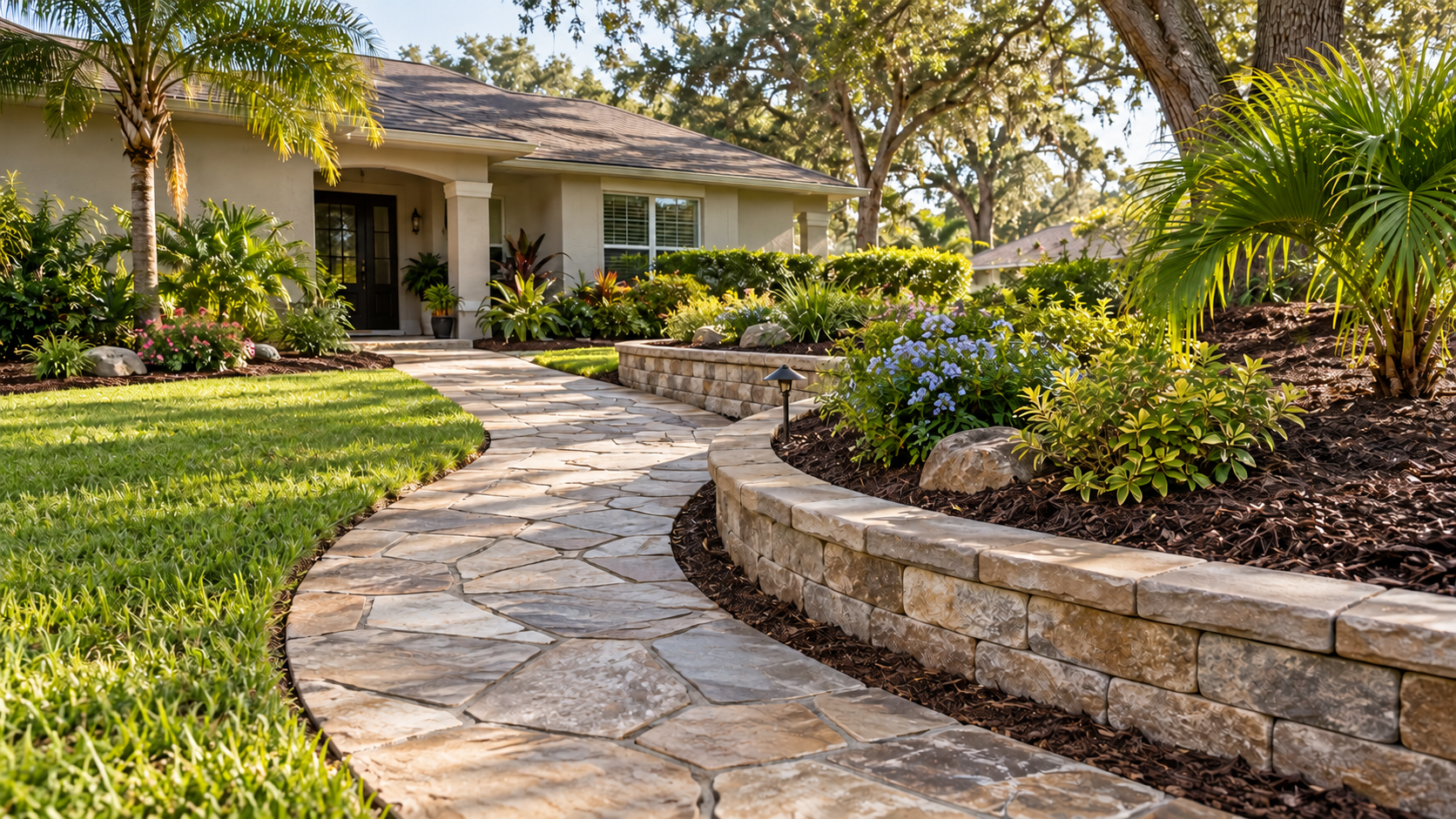
Cooler Days, Better Curb Appeal: Fall Landscape Cleanup and Repairs in Citrus County
Use Citrus County’s cooler fall weather to clean out planting beds, replace rotted retaining walls, repair block walls, and add walkways or stepping stones. The bigger projects are much easier when the weather is cool!
That old planting bed you’ve been meaning to clean out. The rotted wood retaining wall that’s starting to lean. The missing stepping stones that turn a walk through the yard into a balancing act.
Summer has a way of pushing these projects to the bottom of the list. But as cooler fall weeks arrive in Citrus County, it’s a great opportunity to give your outdoor spaces the attention they deserve.
From refreshing tired beds to repairing walls and adding walkways, thoughtful improvements now can make your property more attractive, comfortable, and easier to maintain.
Start With a Fresh Look at Old Plant Beds
Over time, planting beds can lose their definition. Weeds move in, grass creeps over the edges, and overgrown plants hide the original design.
Start by deciding what deserves to stay. Healthy, well-placed plants can often become the foundation of a refreshed bed. Remove unwanted growth, clear accumulated trash, and identify struggling plants before deciding whether to replace them.
Once the area is open, it’s easier to see what needs attention:
Bed edges that need reshaping or new borders.
Bare areas that would benefit from mulch.
Crowded plants that have outgrown their space.
Irrigation lines that need adjustment or repair.
Places where water collects or soil washes away.
A cleaner bed doesn’t have to mean more plants. Sometimes a simpler layout with room for plants to mature creates the strongest result.
Replace Rotted Wood Retaining Walls
Wood landscape walls can blend beautifully into a yard, but age and moisture eventually take their toll. Soft boards, deteriorating posts, loose fasteners, and leaning sections are signs that it’s time for an assessment.
Replacing a failing wall is also an opportunity to improve the overall layout. You might retain the warmth of suitable landscape timbers or choose a properly designed block system for a different appearance.
The important work extends below the surface. A retaining wall needs an appropriate foundation and drainage for the soil it supports. Simply replacing the visible boards may leave the original problem unresolved.
For walls supporting substantial slopes, structures, or nearby loads, have the design and any local requirements checked before work begins.
Give Brick and Block Walls Some Attention
Loose caps, missing mortar, and displaced blocks can make a landscape look neglected. Fall is a useful time to assess these areas and plan repairs.
The repair should match the type of wall. Mortared brickwork and dry-stacked landscape blocks are built differently, and each needs an appropriate approach.
A leaning or bulging wall deserves more than a cosmetic patch. Identify whether movement, drainage, roots, or a failing base is contributing to the damage before deciding how to repair it.
Add Walkways and Stepping Stones Where You Actually Walk
Think about the routes you use every day: from the driveway to the front door, around the house, or out to the shed.
A well-placed walkway can connect these spaces and give your yard a more finished appearance. Stepping stones can provide a relaxed garden path, while a continuous paver walkway may better suit frequently used routes.
Comfort matters as much as appearance. Stones should feel natural to walk between, sit securely, and avoid awkward changes in height. A firm base and thoughtful drainage help keep the finished path usable.
Take Care of the Small Repairs, Too
While the beds are being refreshed, look for the smaller jobs that affect how the whole property feels:
Resetting loose edging or uneven pavers.
Repairing a dragging gate.
Replacing deteriorated landscape borders.
Addressing minor exterior wood damage.
Cleaning stained paths and outdoor surfaces.
Grouping related projects can also prevent unnecessary rework. Finish wall repairs and walkway installation before adding the final mulch and plants.
Make the Most of Florida’s Cooler Season
Fall cleanup doesn’t mean cutting every plant back. Pruning and planting should suit the species, its condition, and the weather ahead.
Choose a stretch of mild weather, allow for rain delays, and follow temperature and curing requirements for any repair materials. A little planning helps turn a collection of overdue jobs into a coordinated improvement.
Ready to make your outdoor space stand out? Contact us to discuss planting-bed cleanups, landscape wall replacement, walkway installation, and general yard repairs in Sugarmill Woods and throughout Citrus County.
Your next yard improvement can start with one tired corner—and grow into a property you enjoy coming home to!
Beautyberry: A Florida Native with Color, Character, and a Place in the Kitchen
Learn how to grow beautyberry in Florida, weigh the pros and cons of this native shrub and explore how it’s purple berries are used in jams and jellies.
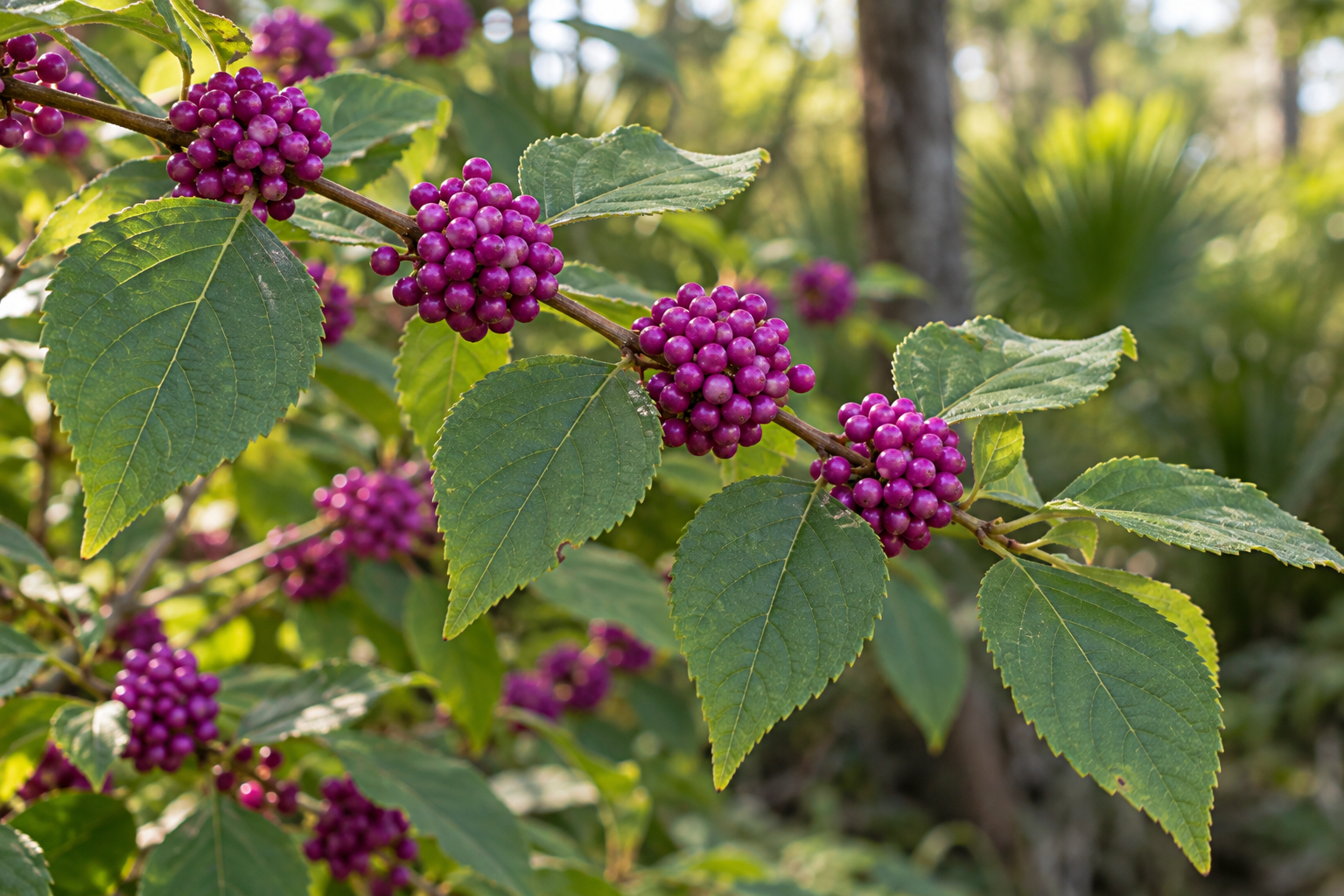
American beautyberry photographed in Florida. Photo: Forest & Kim Starr, via Wikimedia Commons, licensed under CC BY 3.0.

Some plants quietly blend into the landscape. Beautyberry makes you stop and look.
With vivid purple fruit gathered around its stems, American beautyberry (Callicarpa americana) brings an unexpected splash of color to Florida gardens. This native shrub also provides food for wildlife—and a harvest that can become homemade jelly. (gardeningsolutions.ifas.ufl.edu)
What Is Beautyberry?
Often written as “beauty berry,” American beautyberry is a deciduous shrub native to the southeastern United States. Small flowers appear in spring and summer, followed by purple fruit in late summer and fall. Its loose, arching branches give it a relaxed appearance that suits woodland edges and natural garden beds. (plants.ces.ncsu.edu)
The Pros of Growing Beautyberry
Eye-catching fall color. Purple fruit creates a striking display when many flowering plants are winding down.
Food for wildlife. Songbirds and small mammals feed on the fruit.
Low maintenance. Beautyberry generally has few significant insect or disease problems.
An edible harvest. Its fruit offers an opportunity to explore homemade jelly and preserves. (plants.ces.ncsu.edu)
Beautyberry also tolerates dry conditions once established and can grow in sandy soil, making it useful in many Florida landscapes. (blogs.ifas.ufl.edu)
The Cons to Consider
It needs room. American beautyberry can reach roughly 3–8 feet tall and 4–8 feet wide.
It loses its leaves. As a deciduous shrub, it will not provide year-round privacy.
Its shape is informal. Sprawling branches may require occasional pruning near paths or smaller beds.
It dislikes salt exposure. It is a poor choice for locations exposed to coastal salt spray.
Fresh fruit can disappoint. Despite its bright appearance, the fruit can taste bland and leave a dry feeling in the mouth. Cooking it into a sweet spread is often more appealing.
Wildlife may harvest first. Birds can shorten the fruit display—and reduce what is left for your kitchen. (gardeningsolutions.ifas.ufl.edu)
Using Beautyberries in Jellies and Jams
Beautyberry’s kitchen appeal comes from turning an unusual native fruit into something worth sharing. UF/IFAS notes that adding sugar and making jelly or preserves can improve the fruit’s otherwise understated flavor. (gardeningsolutions.ifas.ufl.edu)
Beautyberry Jelly
Jelly is made from strained fruit juice, giving it a smooth texture without fruit pulp or seeds. That makes it a particularly appealing option for beautyberries, which contain several small seeds. Beautyberry jelly is also the preparation most commonly noted by NC State Extension. (plants.ces.ncsu.edu)
Try serving it on warm biscuits, spreading it over toast, or pairing it with cream cheese and crackers.
Beautyberry Jam
Jam retains crushed fruit or pulp, creating a thicker, more textured spread. Beautyberries can be used in this style of preserve, although their small seeds make texture an important consideration. If you prefer a smooth spread, strained jelly may be the better choice.
Successful jams and jellies depend on the right balance of fruit, sugar, acid, and pectin. Follow a recipe’s directions carefully rather than adjusting those ingredients by guesswork. (nchfp.uga.edu)
Harvesting and Preserving Safely
Confirm that you have correctly identified American beautyberry before harvesting. Pick clean, ripe fruit from plants that have not been treated with pesticides unsuitable for edible crops, remove stems and debris, and wash the fruit.
For shelf-stable jars, use a scientifically tested recipe specifically covering the fruit and preparation. Do not substitute beautyberries into another fruit’s canning recipe or assume that a sealed lid proves a preserve is safe. Ask your local Extension office for beautyberry-specific preservation guidance. (nchfp.uga.edu)
Giving Beautyberry a Place in Your Yard
Choose a well-drained spot with sun or partial shade and enough space for its mature branches. Water while it establishes, then adjust watering to weather and soil conditions. Pruning in late winter can help manage its size; flowers and fruit develop on new growth. (blogs.ifas.ufl.edu, plants.ces.ncsu.edu)
Plant beautyberry where you can enjoy its seasonal display, watch visiting birds, and easily reach a few branches at harvest time. Leave some fruit for wildlife, and let the rest inspire your next batch of homemade jelly.
Two Stubborn Vines in Citrus County: Stink Vine and Greenbrier
Identify stink vine, also called skunk vine, and thorny greenbrier in Citrus County. Learn where they grow, how they spread, and ways to control each vine.
If you’ve spent time working in a Citrus County yard, you may have found a vine climbing through a hedge, wrapping around a fence, or reaching into a tree. Cut it back, and before long, it seems to be right where it started.
Two vines homeowners often encounter are stink vine, also called skunk vine, and greenbrier, a thorny vine that grows from a large underground tuber. They can both be frustrating, but they are different plants and deserve different approaches.
Note: The thorny vine with a bulb-like root described here is likely greenbrier, also called Smilax. Several species grow in Florida, so a photo or examination of the plant is needed to confirm its identity. These are two familiar problem vines, though there isn’t enough information here to rank them as the county’s two most common.
1. Stink Vine: The Smelly Vine That Smothers Landscaping
Scientific name: Paederia foetida
Also called: Skunk vine or stinkvine
Status: Non-native and invasive in Florida
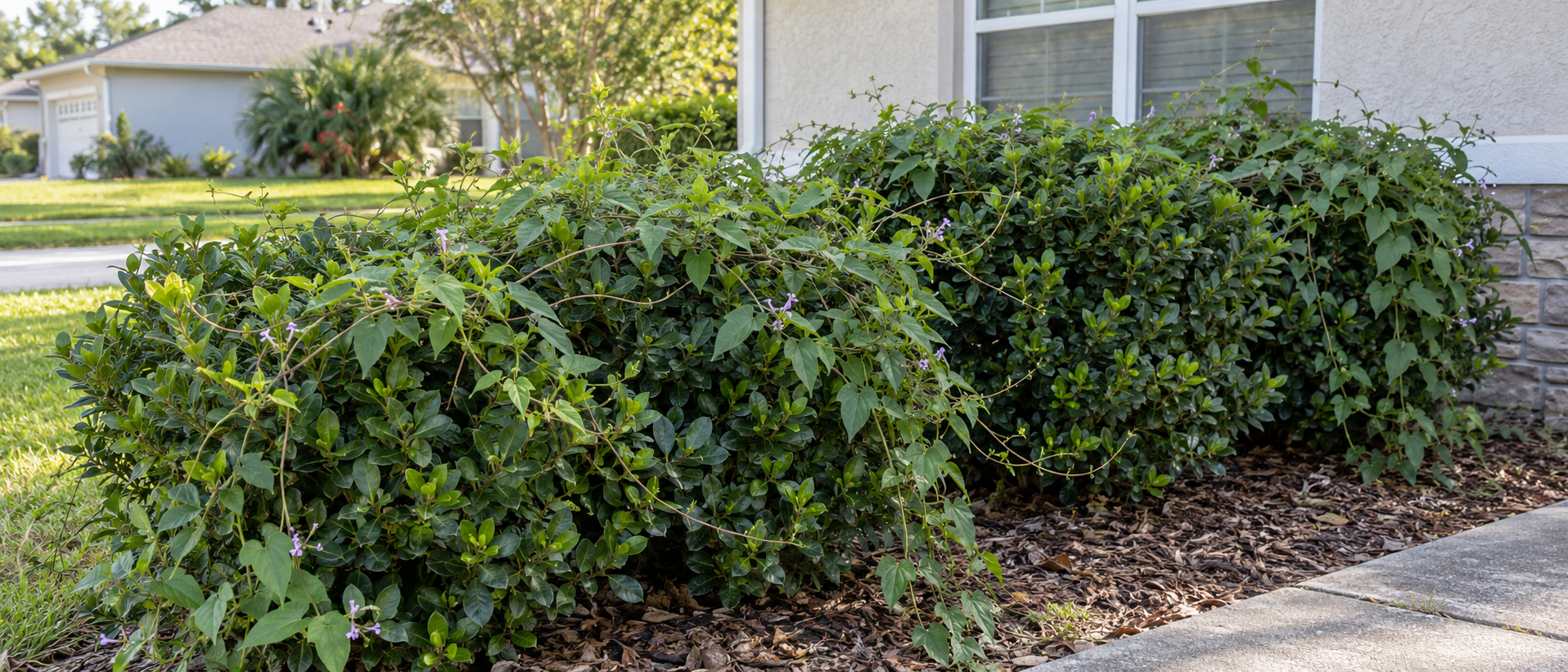
Stink vine gets its name from the unpleasant odor released when its leaves or stems are crushed. The smell is one clue that can help identify it, although the related sewer vine has a similar odor.
The vine has opposite leaves, usually oval to somewhat pointed, and may produce small pale flowers with pinkish or purplish centers. It can grow along the ground or twist its way up fences, shrubs, and trees.
Photo: See UF/IFAS photos of stink vine
Where it grows
Stink vine is well established in west-central Florida, including Citrus County. It can grow in wooded areas, along property edges, in disturbed ground, and through landscaped beds. It tolerates a variety of habitats, from pine and hardwood forests to wetter areas.
How it grows and spreads
Stink vine grows from a woody root system and sends out long, twining stems. As those stems touch the ground, they can take root at points along the vine. Wildlife can also spread its seeds.
Left unchecked, it can form a thick blanket over shrubs and young trees, blocking sunlight and weighing down branches. It can even damage or kill the plants underneath.
How to remove it
Find where the vine enters the ground. Follow the stems back to their roots, looking for additional places where stems have rooted along the soil.
Cut vines climbing into trees or shrubs. Avoid yanking hard on vines high in a tree, since branches can break or desirable plants can be damaged.
Dig out the roots and rooted stems. Small infestations are easier to remove when caught early. Try to remove the whole root system.
Dispose of the material carefully. Pieces of stem can take root, and seeds can germinate in piles of plant debris. Bag the material and check local disposal guidance instead of leaving it on the ground or adding it to a home compost pile.
Check for regrowth and repeat. Remove new shoots promptly. Established infestations may require several rounds of work.
For a larger infestation, a suitable systemic herbicide may help reach the roots. Protect nearby plants, choose a product labeled for the site and method of application, and follow its label exactly. UF/IFAS recommends treatment during active growth and notes that repeat work may be necessary.
2. Greenbrier: The Thorny Vine With the Underground “Bulb”
Scientific name: Smilax species
Also called: Greenbriar, catbrier, or sawbrier
Status: Many Florida greenbriers are native
Greenbrier climbing on a fence. Photo: University of Georgia Cooperative Extension.
If you’ve ever reached into a shrub and come away with scratches, greenbrier may be the culprit. Many types have sharp prickles along their stems, green leaves, and slender tendrils that help them grab onto surrounding vegetation.
The “bulb” people find underground is generally a tuber or rhizome, part of an underground storage system. It allows an established plant to send up new shoots even after the visible vine is cut down.
Where it grows
Greenbrier can grow in woodlands, along fences and property lines, and within landscape beds and shrubs. It can tolerate low light, so it may grow unnoticed inside a hedge before its vines become obvious.
How it grows and spreads
Greenbrier climbs with its tendrils and can weave through and over nearby plants. Underground, it develops a tuber and rhizome system that stores energy. Birds can spread seeds after eating the fruit, helping new plants appear elsewhere in the landscape.
Although greenbrier can be a nuisance in a maintained yard, many species are native and provide food and shelter for wildlife. Removing it from a hedge or walkway makes sense when it’s a problem; a patch at the wooded edge of a property can also have wildlife value.
How to remove it
Wear thick gloves, long sleeves, and eye protection. The prickly stems can scratch skin and snag clothing.
Cut the vine into manageable sections. Carefully remove it from shrubs and fences without pulling so hard that you damage the plants beneath it.
Trace the stems back to the ground. More than one shoot may be connected to the same underground system.
Dig out as much of the tuber and rhizome system as practical. This is the most direct approach for an individual plant, but established roots can be large and difficult to remove—especially among tree or shrub roots.
Watch the area for new shoots. Dig or cut them promptly and repeat as needed.
When digging would seriously damage desirable roots, a properly labeled systemic herbicide may be an option. The University of Georgia describes targeted treatments for greenbrier, including treating a cut stem or carefully treating foliage. Use only a product whose current label permits your intended use, and avoid contact with desirable plants.
Photo of the underground growth: See the University of Georgia’s greenbrier tuber and rhizome photo

Can You Get Rid of Them for Good?
You can eliminate an individual infestation, but cutting the visible vine once usually isn’t enough. Roots or underground growth may remain, and new plants can arrive from seeds or nearby property.
The best approach is to remove as much of the root system as possible, check the area regularly, and deal with new shoots while they’re small. Larger or long-established patches may need repeated treatment over more than one growing season.
If you’re unsure which vine you have or what treatment is appropriate near your landscaping, contact UF/IFAS Extension Citrus County for local identification and guidance.
Native Plants, vs. Non-Native Plants, vs. Invasive Plants
Learn how native, non-native, and invasive plants differ in Citrus County, FL, and how to choose plants that suit your yard and the local landscape.
Make It Stand Out: Native, Non-Native, and Invasive Plants in Citrus County
A beautiful landscape starts with choosing the right plants. Here in Citrus County, that means looking beyond flower color and asking a few practical questions: Does this plant belong in our environment? Will it thrive in this spot? Could it spread beyond the yard?
Understanding the difference between native, non-native, and invasive plants can help you create lasting curb appeal while protecting the natural beauty of Florida’s Nature Coast.
“Natural” Doesn’t Always Mean Native
People often describe plants growing on their own as “natural.” But a plant growing beside a road or along a fence isn’t necessarily native.
Native plants occur naturally in a region without being introduced by people. Non-native plants were brought from somewhere else. Some non-native plants grow successfully without cultivation—a condition called being naturalized—but that doesn’t make them native. And being non-native does not automatically make a plant invasive. (fnps.org, plants.ifas.ufl.edu)
Why Consider Native Plants?
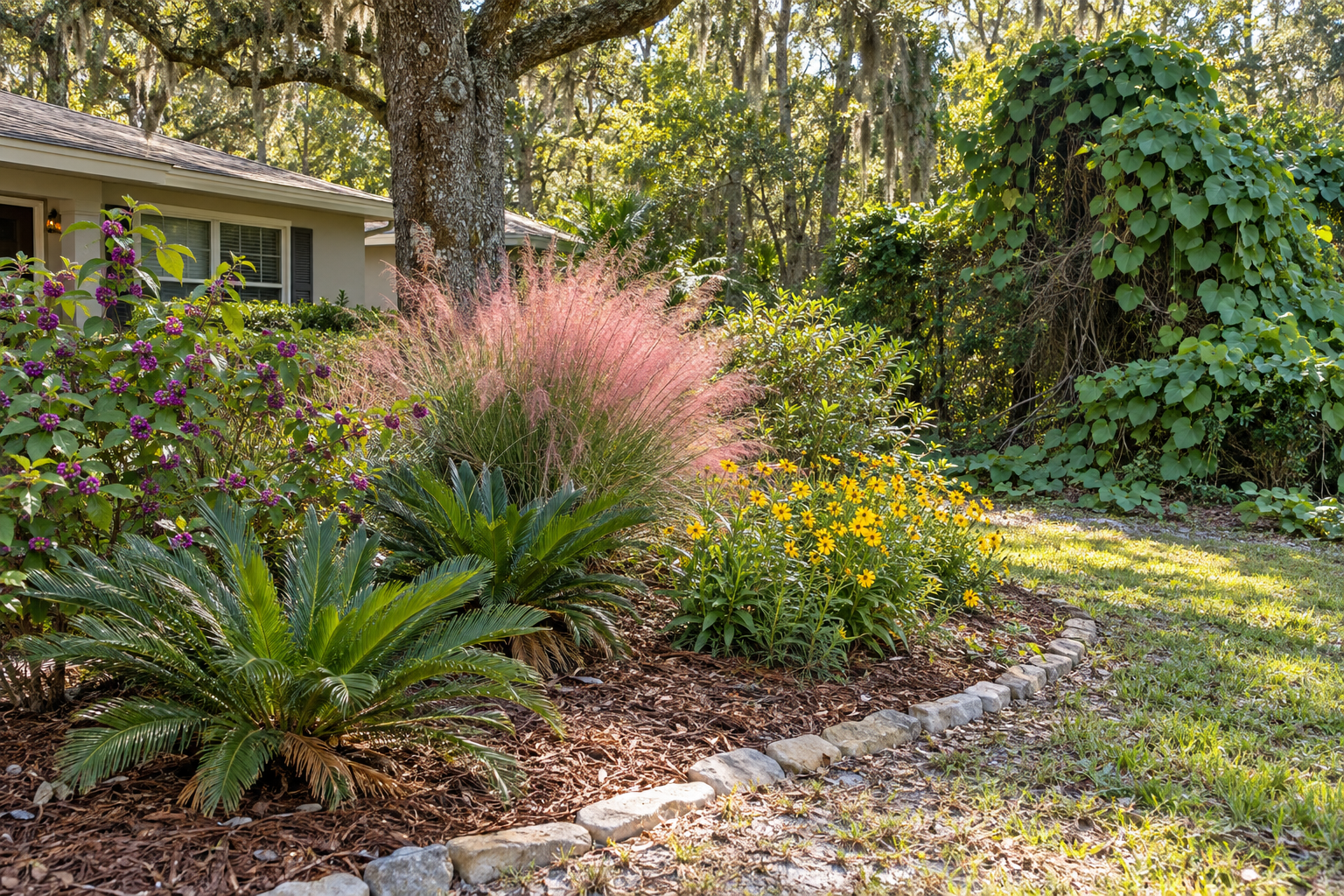
Florida natives can bring color, texture, and wildlife value to a thoughtfully designed yard. American beautyberry, muhly grass, and coontie are examples worth considering for Citrus County landscapes when the growing conditions suit them. Many native plants provide food or habitat for wildlife. (gardeningsolutions.ifas.ufl.edu)
Native doesn’t mean maintenance-free, however. A plant adapted to a wet habitat may struggle in a dry, sandy bed. Sunlight, drainage, soil moisture, and mature size still matter. The goal is to match the plant to the location, rather than constantly changing the location to keep the plant alive. (gardeningsolutions.ifas.ufl.edu)
Non-Native Plants Can Still Have a Place
A responsible landscape doesn’t have to contain only native plants. Carefully selected non-native ornamentals can contribute flowers, screening, and seasonal interest.
The important distinction is whether a plant poses an invasion risk. UF/IFAS publishes alternatives to invasive landscape plants that include both native and non-native choices. Check the exact species and cultivar before buying; similar common names can hide important differences. (ask.ifas.ufl.edu)
What Makes a Plant Invasive?
An invasive plant is non-native and causes—or can cause—environmental, economic, or human harm. It is more than an inconvenient weed or a shrub that needs frequent trimming. Invasive plants can escape cultivation and disrupt natural plant communities. (plants.ifas.ufl.edu)
They may crowd out native plants, change habitat structure, or interfere with ecological functions. Some can also hybridize with native species. What begins as an attractive addition to one yard can become a problem beyond the property line. (floridainvasives.org)
Two Plants Worth Knowing
Air potato vine (Dioscorea bulbifera) is a serious Florida invasive. It climbs over other vegetation and spreads through potato-like growths called bulbils, which can sprout into new plants. Simply cutting back the visible vine may leave material capable of restarting the infestation. (ask.ifas.ufl.edu, sfyl.ifas.ufl.edu)
Invasive lantana (Lantana strigocamara, often called Lantana camara) demonstrates why attractive flowers don’t tell the whole story. Birds spread its fruits, helping it escape into other areas. Native lantanas and certain assessed sterile cultivars are different choices, so identification matters before planting or removing anything. (plants.ifas.ufl.edu, ask.ifas.ufl.edu)
Make Better Choices Before You Plant
For Citrus County homeowners, a few habits can prevent future headaches:
Confirm the plant’s scientific name and cultivar.
Check its current UF/IFAS assessment before purchasing.
Choose plants suited to your yard’s light, moisture, and available space.
Identify unwanted plants before removing them, and use species-specific control and disposal guidance.
Recheck cleared areas for seedlings or regrowth.
UF/IFAS Extension Citrus County encourages residents to keep up with invasive plant assessments because recommendations can change as new information becomes available. (gardeningsolutions.ifas.ufl.edu, blogs.ifas.ufl.edu)
Curb Appeal That Fits Our Community
Our approach to landscaping starts with attention to detail—and that includes what goes into the ground. We believe a successful yard should complement your home, suit your maintenance goals, and respect the surrounding environment.
Whether you’re refreshing a planting bed or planning a larger transformation, thoughtful plant selection makes a difference you can appreciate for years.
Let’s make your landscape stand out with plants chosen for the right reasons.
Welcome to Our New Blog!
Make It Stand Out!
A Beautiful Yard Starts with the Details
Welcome to Home and Yard Repair, and our new blog dedicated to helping you bring out the best in your home’s landscape, function, and appearance! We’re glad you’re here! We’ll be sharing practical ideas, project inspiration, and tips for creating outdoor spaces that look inviting and feel like your own.
Curb appeal begins the moment someone sees your property. A neatly trimmed shrub, a clean walkway, fresh mulch, and a thoughtfully placed planting bed can all make a difference. Whether you’re refreshing an established yard or planning a whole new look, the details help bring everything together.
To us, great landscaping should look beautiful and work for the way you live. That means listening to your ideas, considering your property’s needs, and helping you choose improvements that fit your style and maintenance goals. From simple yard cleanups to landscape installations, we bring care and attention to every project.
Our commitment to customer satisfaction starts with clear communication and continues through the finishing touches. We want you to feel comfortable asking questions, confident in the work, and proud of the result. Straight borders, carefully shaped shrubs, tidy beds, and a clean jobsite all matter—because it’s your home, and the details deserve attention.
We look forward to sharing what’s possible for yards throughout Sugarmill Woods and all of Citrus County, including welcoming entrances, colorful planting beds, low-maintenance landscapes, and inviting outdoor gathering spaces.
Our motto is “Design, Build, Sustain”.
Thank you for visiting! If there’s an area of your yard you’ve been wanting to improve, we’d love to hear your ideas.
Let’s give your home a first impression you’ll love coming back to!