Native Plants, vs. Non-Native Plants, vs. Invasive Plants
Learn how native, non-native, and invasive plants differ in Citrus County, FL, and how to choose plants that suit your yard and the local landscape.
Make It Stand Out: Native, Non-Native, and Invasive Plants in Citrus County
A beautiful landscape starts with choosing the right plants. Here in Citrus County, that means looking beyond flower color and asking a few practical questions: Does this plant belong in our environment? Will it thrive in this spot? Could it spread beyond the yard?
Understanding the difference between native, non-native, and invasive plants can help you create lasting curb appeal while protecting the natural beauty of Florida’s Nature Coast.
“Natural” Doesn’t Always Mean Native
People often describe plants growing on their own as “natural.” But a plant growing beside a road or along a fence isn’t necessarily native.
Native plants occur naturally in a region without being introduced by people. Non-native plants were brought from somewhere else. Some non-native plants grow successfully without cultivation—a condition called being naturalized—but that doesn’t make them native. And being non-native does not automatically make a plant invasive. (fnps.org, plants.ifas.ufl.edu)
Why Consider Native Plants?
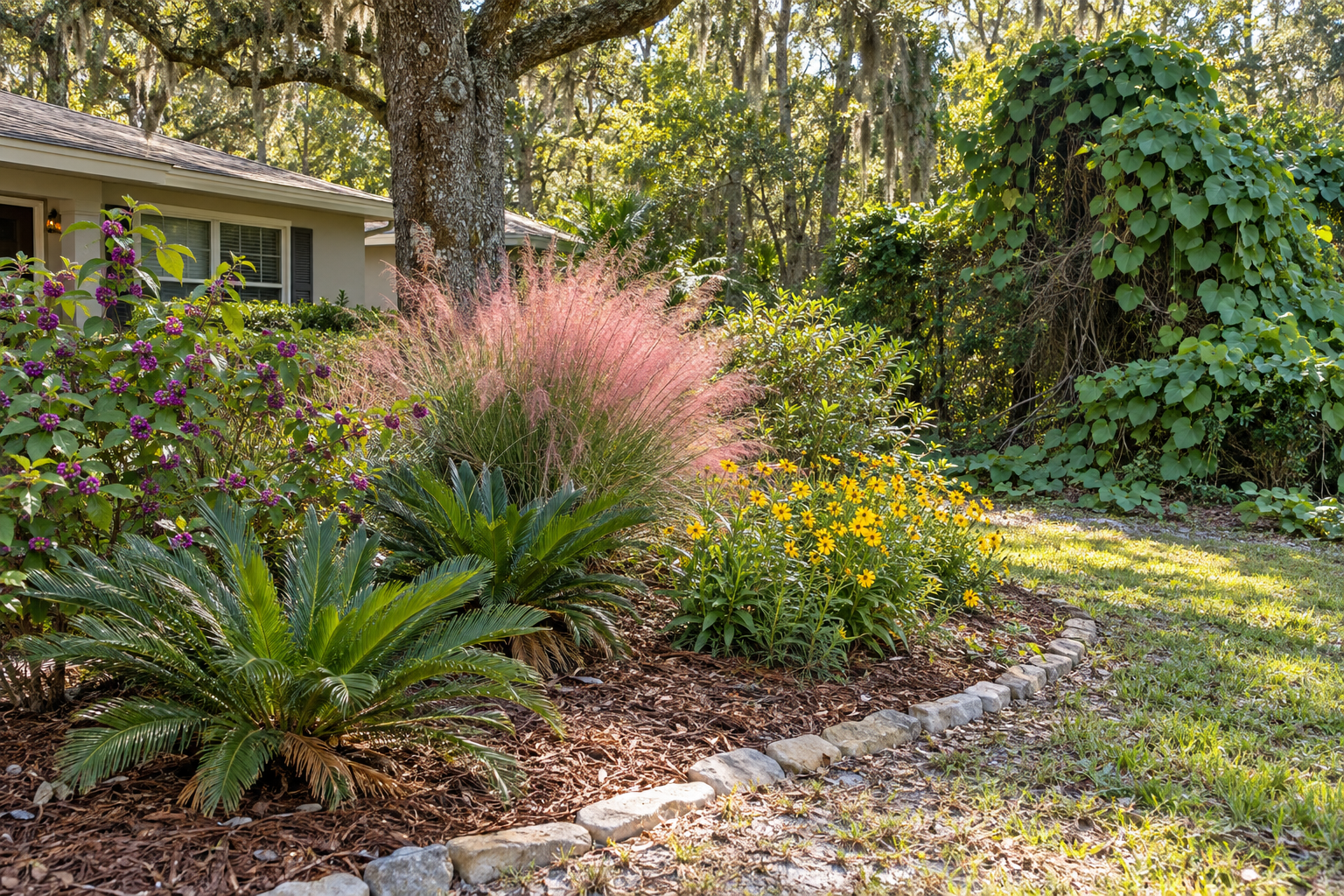
Florida natives can bring color, texture, and wildlife value to a thoughtfully designed yard. American beautyberry, muhly grass, and coontie are examples worth considering for Citrus County landscapes when the growing conditions suit them. Many native plants provide food or habitat for wildlife. (gardeningsolutions.ifas.ufl.edu)
Native doesn’t mean maintenance-free, however. A plant adapted to a wet habitat may struggle in a dry, sandy bed. Sunlight, drainage, soil moisture, and mature size still matter. The goal is to match the plant to the location, rather than constantly changing the location to keep the plant alive. (gardeningsolutions.ifas.ufl.edu)
Non-Native Plants Can Still Have a Place
A responsible landscape doesn’t have to contain only native plants. Carefully selected non-native ornamentals can contribute flowers, screening, and seasonal interest.
The important distinction is whether a plant poses an invasion risk. UF/IFAS publishes alternatives to invasive landscape plants that include both native and non-native choices. Check the exact species and cultivar before buying; similar common names can hide important differences. (ask.ifas.ufl.edu)
What Makes a Plant Invasive?
An invasive plant is non-native and causes—or can cause—environmental, economic, or human harm. It is more than an inconvenient weed or a shrub that needs frequent trimming. Invasive plants can escape cultivation and disrupt natural plant communities. (plants.ifas.ufl.edu)
They may crowd out native plants, change habitat structure, or interfere with ecological functions. Some can also hybridize with native species. What begins as an attractive addition to one yard can become a problem beyond the property line. (floridainvasives.org)
Two Plants Worth Knowing
Air potato vine (Dioscorea bulbifera) is a serious Florida invasive. It climbs over other vegetation and spreads through potato-like growths called bulbils, which can sprout into new plants. Simply cutting back the visible vine may leave material capable of restarting the infestation. (ask.ifas.ufl.edu, sfyl.ifas.ufl.edu)
Invasive lantana (Lantana strigocamara, often called Lantana camara) demonstrates why attractive flowers don’t tell the whole story. Birds spread its fruits, helping it escape into other areas. Native lantanas and certain assessed sterile cultivars are different choices, so identification matters before planting or removing anything. (plants.ifas.ufl.edu, ask.ifas.ufl.edu)
Make Better Choices Before You Plant
For Citrus County homeowners, a few habits can prevent future headaches:
Confirm the plant’s scientific name and cultivar.
Check its current UF/IFAS assessment before purchasing.
Choose plants suited to your yard’s light, moisture, and available space.
Identify unwanted plants before removing them, and use species-specific control and disposal guidance.
Recheck cleared areas for seedlings or regrowth.
UF/IFAS Extension Citrus County encourages residents to keep up with invasive plant assessments because recommendations can change as new information becomes available. (gardeningsolutions.ifas.ufl.edu, blogs.ifas.ufl.edu)
Curb Appeal That Fits Our Community
Our approach to landscaping starts with attention to detail—and that includes what goes into the ground. We believe a successful yard should complement your home, suit your maintenance goals, and respect the surrounding environment.
Whether you’re refreshing a planting bed or planning a larger transformation, thoughtful plant selection makes a difference you can appreciate for years.
Let’s make your landscape stand out with plants chosen for the right reasons.